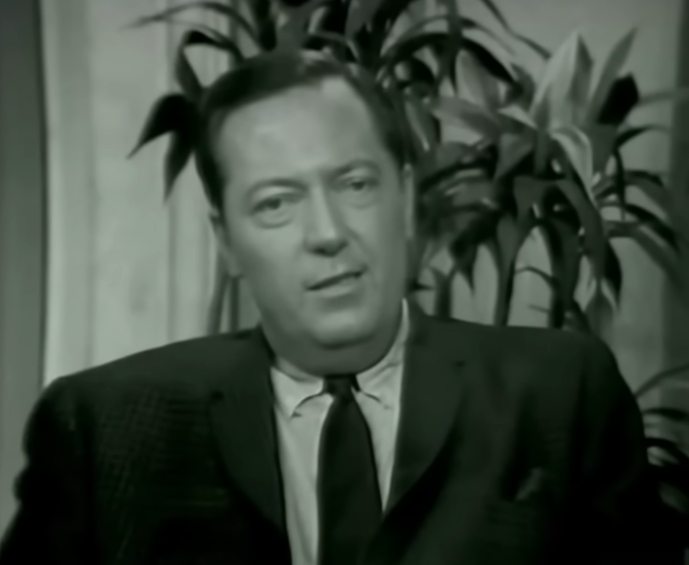
Jim Garrison was a New Orleans district attorney and author whose name became permanently linked to the debates over the assassination of President John F. Kennedy. To some, he is a bold prosecutor who challenged an official cover-up; to others, he is an overreaching local politician who built a deeply flawed case on unreliable evidence. Either way, he is central to the modern mythology around the JFK assassination.
Key facts at a glance
-
Full name: James Carothers “Jim” Garrison (born Earling Carothers Garrison)
-
Lifespan: November 20, 1921 – October 21, 1992
-
Primary role: District Attorney of Orleans Parish (New Orleans), 1962–1973
-
Best known for: Conducting a high-profile investigation into the JFK assassination and prosecuting Clay Shaw for alleged conspiracy
-
Other roles: World War II veteran, former FBI agent, state appellate judge, author, and occasional film actor
Early life and education
Jim Garrison was born Earling Carothers Garrison in Denison, Iowa, the first child and only son of Earling R. Garrison and Jane Ann Robinson. His parents divorced when he was very young, and he moved with his mother to New Orleans, where he grew up.
After graduating from high school in New Orleans, he joined the U.S. Army in 1941. He served in the U.S. Army Air Forces during World War II, flying bombing missions that reportedly left him with lasting psychological trauma. After the war, he returned to New Orleans, enrolled at Tulane University Law School, and earned his law degree in 1949.
Garrison then spent a brief period as an FBI agent, assigned to the Seattle office, before returning to Louisiana to work as a trial lawyer and enter local politics.
Rise as New Orleans district attorney
In the 1950s and early 1960s, Garrison moved from private practice into public service, first as an assistant district attorney, then as a candidate for office. After losing an early judicial race, he ran for Orleans Parish district attorney in 1961 and won, taking office in 1962.
As D.A., he quickly gained a reputation as a flamboyant, media-savvy figure. He pursued vice raids in the French Quarter, targeted prostitution and bar corruption, and clashed with the city’s political and judicial establishment.
In one notable episode, he was convicted under a Louisiana criminal defamation statute after accusing local judges of corruption. The U.S. Supreme Court later overturned that conviction in Garrison v. Louisiana (1964), striking down the statute as unconstitutional and reinforcing protections for criticism of public officials.
The JFK assassination investigation
Garrison’s enduring fame comes from his decision, in the late 1960s, to launch a local investigation into the 1963 assassination of President John F. Kennedy.
Launching the probe
In 1966, after receiving tips that New Orleans figures such as pilot David Ferrie might be connected to Lee Harvey Oswald, Garrison opened what became a sweeping inquiry. He rejected the Warren Commission’s lone-gunman conclusion and came to believe that the assassination was the result of a conspiracy involving elements of the CIA, the military, organized crime, and anti-Castro groups.
His office interviewed witnesses, pursued leads that connected New Orleans to Dallas, and argued that Oswald’s time in New Orleans placed him inside a broader network of operatives.
The Clay Shaw trial
The investigation culminated in 1969 with the prosecution of New Orleans businessman Clay Shaw, whom Garrison charged with conspiring to assassinate the president. At trial, Garrison’s team argued that Shaw had been part of a secret plot and that meetings in New Orleans involving Shaw, Ferrie, and Oswald were linked to the murder in Dallas.
Garrison subpoenaed the Zapruder film from Life magazine, making it possible for the jurors to see that film in a courtroom setting at a time when it was rarely publicly exhibited.
After a highly publicized trial, the jury deliberated for less than an hour before acquitting Shaw. The case produced no convictions and drew heavy criticism from many journalists, legal scholars, and historians, who argued that Garrison’s theory relied on questionable witnesses, speculative connections, and weak evidence.
Author and media figure
Although he lost the Shaw case, Garrison continued to defend his interpretation of the assassination for the rest of his life.
He published three books connected to his views:
-
“A Heritage of Stone” (1970) – a broad attack on the official account of the assassination and the national security establishment
-
“The Star-Spangled Contract” (1976) – a novel drawing on assassination themes
-
“On the Trail of the Assassins” (1988) – his memoir-style account of the New Orleans investigation and his alternative narrative of the JFK case
“On the Trail of the Assassins” became the principal source for Oliver Stone’s 1991 film “JFK.” In that movie, Kevin Costner portrays Garrison, while Garrison himself makes a cameo as Chief Justice Earl Warren.
Beyond the film, Garrison gave interviews, wrote articles, and became a recurring reference point in both critical and sympathetic works on the assassination.
Later career and judicial service
Garrison’s tenure as district attorney ended amid controversy. In 1973, he was tried on federal charges of accepting bribes related to pinball machine operations, but a jury acquitted him. He then lost his re-election bid for district attorney to Harry Connick Sr.
His political career rebounded in 1978, when he won a special election to serve on the Louisiana Fourth Circuit Court of Appeal. He was subsequently re-elected and remained on the bench until his death in 1992 in New Orleans.
Reputation and legacy
Jim Garrison’s legacy is unusually polarized.
Many mainstream historians, journalists, and legal analysts view his JFK investigation as a serious misuse of prosecutorial power. They describe the Clay Shaw prosecution as a cautionary example, citing unreliable witnesses, speculative links, and aggressive tactics that did not meet evidentiary standards.
At the same time, a segment of researchers and conspiracy-minded authors regard Garrison as one of the first prominent public officials to challenge the Warren Commission and to frame the assassination as the work of a deep security apparatus rather than a lone gunman. They see him as an early, if imperfect, whistleblower whose efforts helped keep skepticism about the official narrative alive.
Oliver Stone’s “JFK” reintroduced Garrison’s theories to a mass audience in the early 1990s, turning him into a central character in the cultural story of the assassination. Even critics of the film acknowledge that it had a major impact on public perceptions and on later government action, including the push for declassification of assassination records.
How does he fit in an “Unexplained” context
For any knowledge base dealing with unexplained events, state secrecy, or major political assassinations, Jim Garrison is a pivotal figure:
-
He represents the first major attempt by a local prosecutor to formally challenge the federal narrative of the JFK assassination.
-
His investigation helped introduce key pieces of evidence, like the Zapruder film, into broader public awareness.
-
His books and their adaptation in “JFK” ensured that the idea of a far-reaching conspiracy involving intelligence agencies became embedded in popular culture.
Whether seen as a courageous outlier or a cautionary tale, Garrison stands at the junction of law, politics, and conspiracy theory, and remains one of the defining personalities in the long-running debate over what really happened in Dallas in 1963.